Short Description#
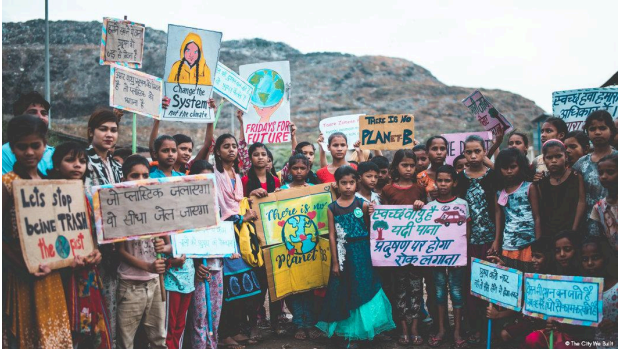
In India, young changemakers and climate activists are rewriting the script of climate activism. From forests to university corridors, their collective efforts are building networks of care, action, and accountability which redefine what it means to fight for the planet in 2025.
Rise of Youth Climate Movement in India:#
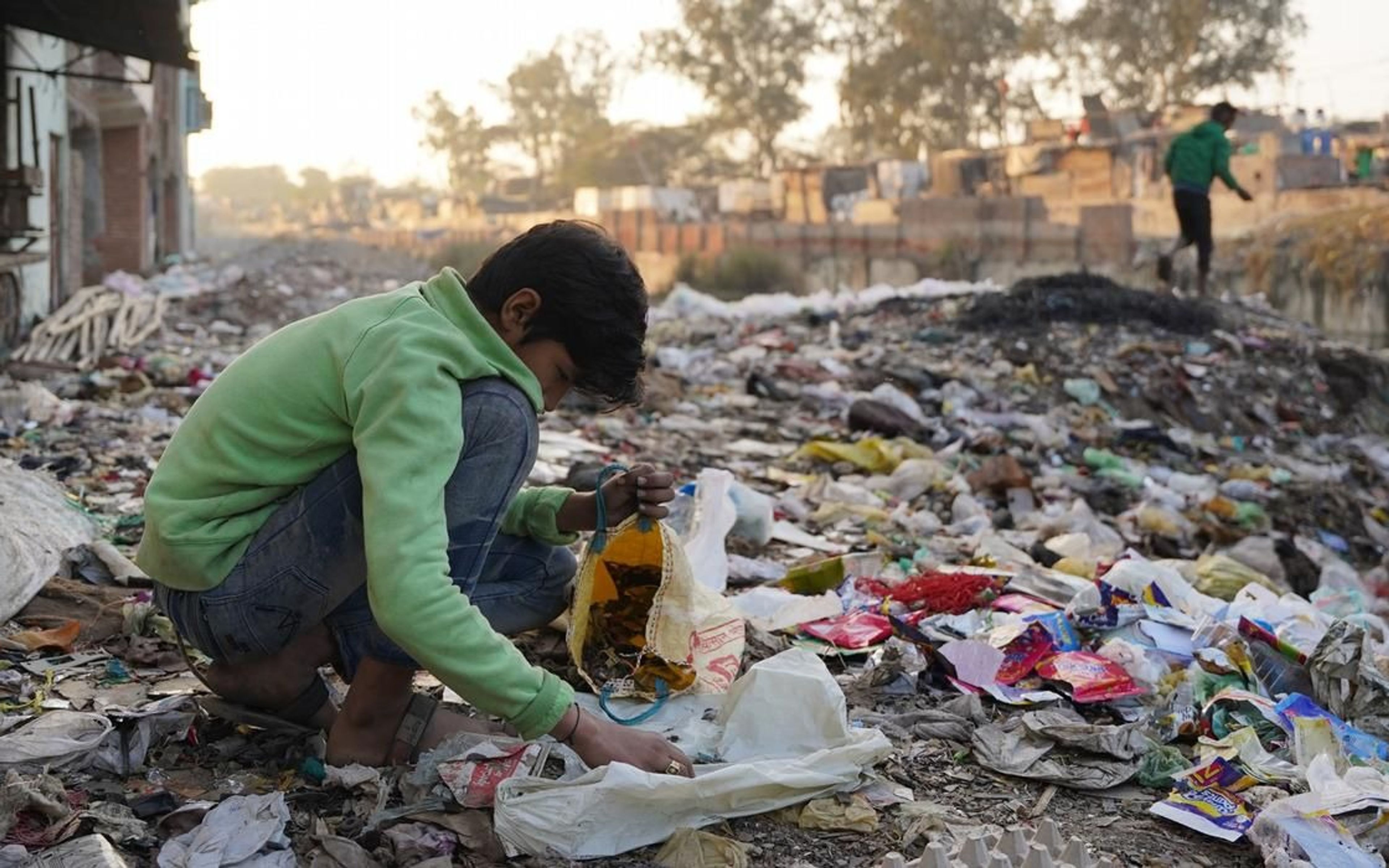
From Anxiety to Action With rising advancement in technology, human life is becoming easier and more liveable. But what counters the idea of a good future are the rising environmental issues, some of which we hear in our day-to-day life such as climate change, global warming, air pollution and water pollution. The impact of climate change is cumulative (heat waves, wildfires, sea level rising, ice melting, flooding, increased storms, etc.) which lead to problems in the environment and economy, but also cause both physical and mental health distress. There is a decline in productivity amongst the younger generation created by climate change for the youth, who are the future of our world. They feel severely impacted and stressed by these issues and have developed eco-anxiety, something defined by UNICEF as “an emergent mental health problem, which means that as a condition it is changing and developing in line with the changing climate crisis.”
A survey conducted by Preetha Banerjee for the Down To Earth Magazine records that “Some 94 per cent of the respondents said that they are directly impacted by the disruptions caused by climate change” which means that eco-anxiety is a wide reality experienced by most of the Indian youth in the contemporary times.
But in a country whose youth feels directly impacted by climate change, does the story end with feeling anxious alone, or is there any action taken to curb the climate related problems and pave the way for a greener and better future as well? This article attempts to explore the growth of youth-led climate organizations in India which are rigorously searching for solutions, actively voicing their opinion to the administration and working on implementing the solutions, comprehensively trying to solve the problems at hand.
Mapping India’s Youth-Led Climate Networks#
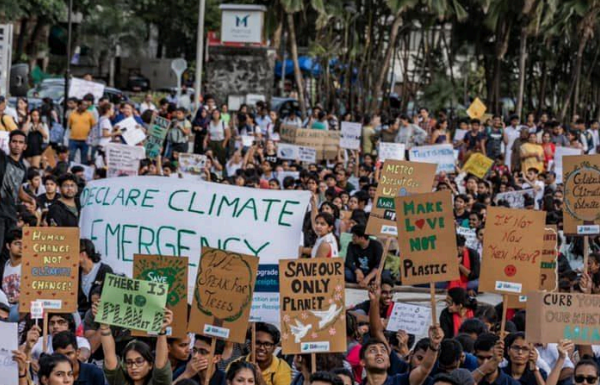
Against the backdrop of an ongoing climate emergency, youth across the world have been taking action, voicing their concerns and highlighting the urgency of tackling climate change as they are at the forefront of the emergency, leading to global mobilisation in the form of movements and protests demanding climate action from governments, corporates and institutions. The importance of immediate action is more than it has ever been before and youth across Indian states and union territories are trying their best to do their part.
The Under2 Coalition, a climate group, reports that Indian states, besides collaborating with civil society organizations and academic institutions, are also building youth leadership in their regions. Working alongside bureaucratic and political leaders, these young, dynamic individuals from a range of backgrounds are championing and catalysing state-level initiatives and programs while supporting Indian states in revising the State Action Plan on Climate Change.
Another survey by the Climate Scorecard reported that “78% of Indian youth feel equipped to act against issues arising from climate change like the loss of forest cover, decreased agriculture productivity, dry seasons, rises in temperature, uneven rainfall pattern and loss of biodiversity. However, the report also suggested they also face a challenge in finding opportunities for participation in solving such issues because of limited digital access, hierarchical social cultures that exclude young people, and a lack of access to train.” There are considerable gaps in mobilising climate action for the youth in India, but the emergence of many youth-led climate groups are addressing this gap and building networks for collective action.
A few examples of the youth led climate activism in India are as follows.
- Since its inception in 2008, Indian Youth Climate Network (IYCN) has served as a notable organization in India’s youth climate ecosystem. Founded by a coalition of young people responding to the absence of Indian youth voices at the 2007 United Nations Climate Change Conference, it is currently India’s largest youth network. The IYCN set out to build networks, amplify youth voices in global forums and catalyse on-ground action across India. Over time, IYCN has built city- and state-level chapters and tries to work towards completing the 2030 Sustainable Development Goals (SDGs).
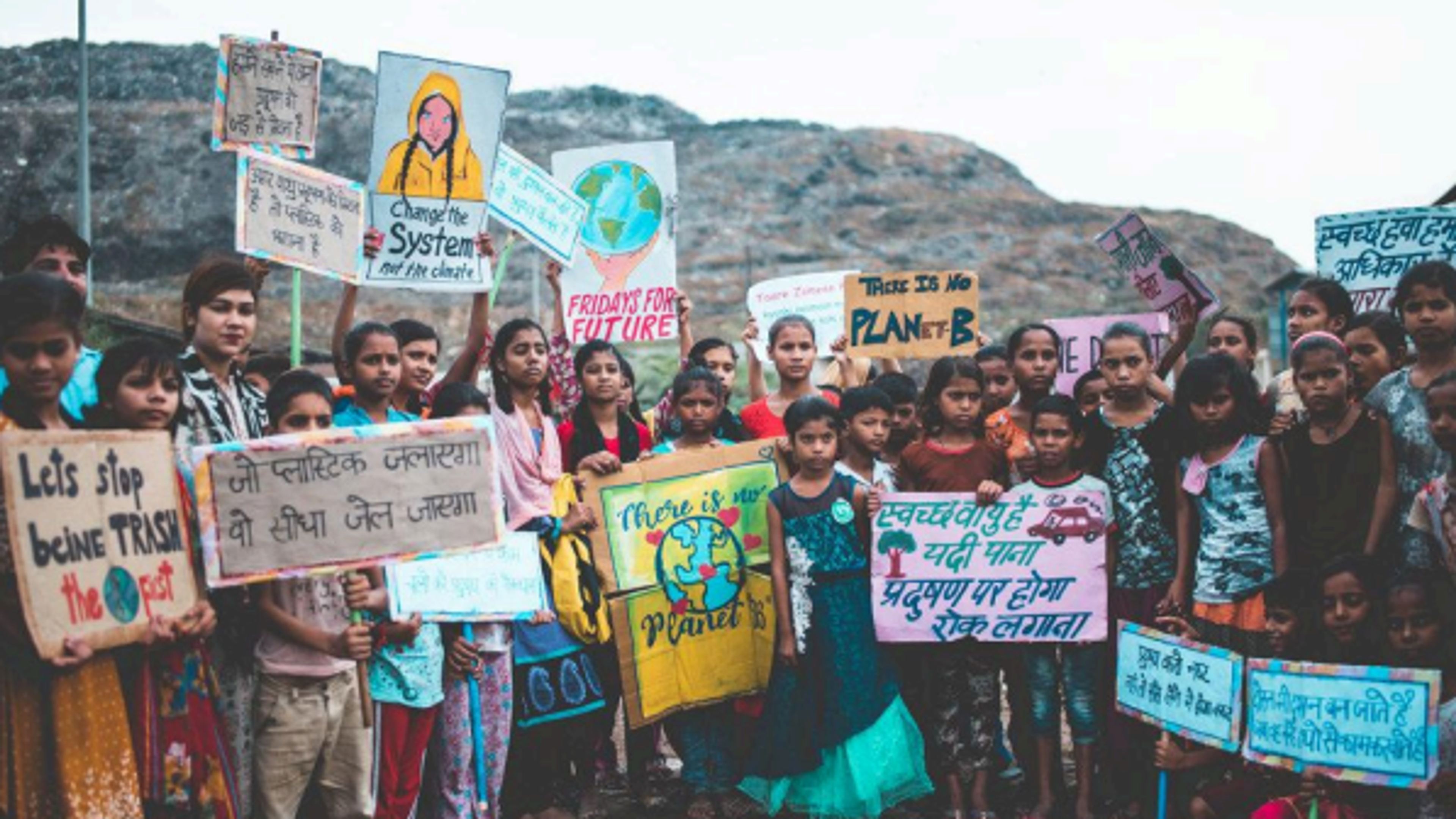
- Beyond IYCN, a second tier of youth climate organisations has emerged, each carving out distinct roles. For example, Fridays for Future India (FFF India) imports and localises the global student-strike model pioneered by Fridays for Future, launching more than 30 chapters across India, binding youth activism around visible mass action.
- Meanwhile, Let India Breathe emphasises tangible on-the-ground campaigns, such as defending the Aarey forest in Maharashtra or protecting the Mollem National Park and bridges youth activism with institutional accountability.
- Then there’s Youth for Climate India, which expands the network further into a more inclusive organisation, engaging children, elders, LGBTQ+ and marginalised communities, mobilising both rural and urban strata in over 20 cities.
- The network further extends into regional and thematic nodes. Organisations such as Haiyya- Youth Climate Resilience Network bring intersectional, feminist, anti-caste and community-embedded leadership to the climate space, addressing the gaps specific to Indian society for more inclusive climate action.
- YWater Foundation which is a queer-led, youth-driven foundation in India that works on water, climate, and gender equality. It emphasises advocacy and youth leadership, combining climate and social justice issues.
- Groups like the Mumbai-based EARTH5R build cross-country citizen science and technology links, thereby connecting India’s youth movement to global flows and digital activism.
Each of these organisations are located on a structural spectrum from national coordination (IYCN), mass mobilisation (FFF India), inclusive network-building (Youth for Climate India), specialised campaigning (Let India Breathe), regional resilience leadership (Haiyya), and global-digital bridging (EARTH5R). In mapping this network, one sees that the nodes are linked by shared goals, youth empowerment and climate action, overlapping membership engaging multiple groups and complementarity of strategy (policy advocacy + mass events + community activism). The result is a layered organisational map across India: national hubs (Delhi, Bengaluru, Mumbai) feeding out to state-level chapters, inter-city campaigns, campus networks, and local community action groups.


Numbers that Matter: Trying to find the Participation Data#
There is no single source of finding out the participation data and trying to calculate an exact percentage of youth engaged in climate action also differs as some people are actively engaged on a regular basis while some participate only occasionally. But a few essential numbers to have a broader understanding of the participation data can be observed from a few examples.
- IYCN has reached out to more than 10,000 youth through direct outreach activities like the ‘Climate Road Tour’ covering the entire expanse of the country from Chennai to Kashmir, across 14 cities and many towns. ● Fridays for Future has 60 local chapters across the country.
- In 2024, Meri LiFE, a digital platform developed with support from the Ministry of Environment, Forest and Climate Change.engaged over 9.8 million young people and facilitated the planting of more than 894 million trees.
- EARTH5R engages 90,000 volunteers across 140 countries from its Mumbai base
From the data mentioned, it can be said that roughly 10–12% of India’s youth (35–40 million people) are directly or indirectly engaged in climate-related activism or participation initiatives.
Tracking Impact: From Awareness to Measurable Outcomes#
Tracking outcomes of youth-led climate activism in India requires moving beyond event counts to measurable impact and several emerging data‐points provide glimpses of this transition.
- A specific case is the Youth4Water programme in Odisha, where around 5,000 young volunteers have already been mobilised as “WASH ambassadors”, raising awareness on water, sanitation and climate‐conservation issues with a target of reaching 50,000 youth by 2025.
- On the capacity‐building and leadership side, the The Energy and Resources Institute (TERI) “Youth Climate Conclave 2025” brought together young changemakers with policy-makers and mentors, enabling peer-to-peer knowledge exchanges, and culminated in a youth-pledge.
Taken together, these outcomes suggest that youth involvement is not just high in volume but increasingly structured: with measurable volunteer numbers, organised events and training platforms.
Scaling up in the big 2025#
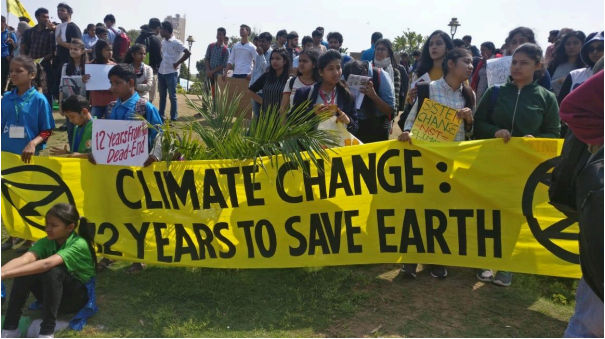
Looking ahead to 2025, youth-led climate organisations and networks in India are anchoring around ambitious mobilisation goals that combine scale, participation and policy-impact.
- For instance, the Green Rising India Alliance aims to equip 50 million children and youth by 2025 with green skills, climate literacy, and platforms for action.
- The Climate Week India 2025 has co-created a set of goals that include building 100 new alliances, reaching at least 10 ambassadors across five cities and producing a collective youth voice document for policy impact by January 2026.
India’s youth is steering forward into the future, not as the victims of climate change but as the architects of a greener, fairer future. Their collective power is reshaping policy, innovation, and public awareness from the ground up. As 2025 approaches, sustained mobilisation and accountability will decide whether or not this momentum transforms into lasting climate action for generations.